

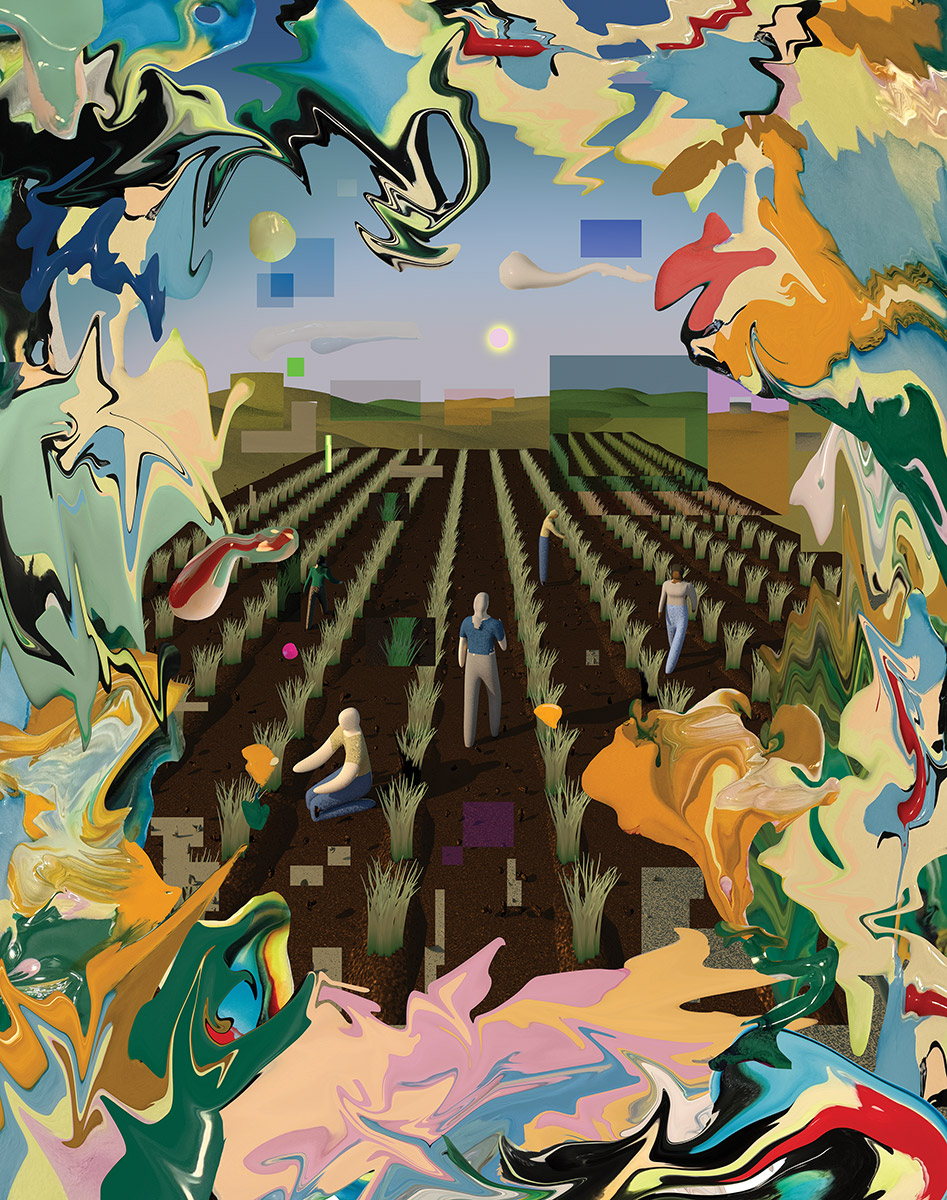
In Beltrami, Minnesota, brothers Andrew and James Johnstad run their family farm where they raise wheat, corn, sugar beets, and soybeans. Having grown up on these fields, they know every inch of the land, cultivated by their family for four generations. But the soil tells a more complex story than the human eye can read on the surface. And that story is one that the Johnstads, along with many other farmers, want to understand better. As they work to solve the onslaught of challenges related to climate change and adverse weather events—like abnormal amounts of rainfall one year, followed by abnormal drought the next—all while battling wind erosion, water runoff, and herbicide-resistant weeds, soil health is more important than ever.
“There’s a generational fear that comes with farming,” says James Johnstad. “There have been many family farms that have ceased to exist because of certain problems that people couldn’t overcome at the time. Now we know we need to make the soil better. Our grandfather always instilled in us that we should leave the land better than we found it.”
Many of the biggest problems facing farmers today are rooted in the soil. Just one tablespoon of healthy, living soil contains billions of microscopic organisms—all of which provide essential nutrients and carbon dioxide for plant growth as well as natural drainage and structure. But that healthy soil has been degraded over the past century, as traditional agricultural practices such as plowing and planting with tractors, tilling, and using fertilizers, and pesticides stripped away healthy microorganisms. The result is dry and desolate land, which has taken a direct toll on human health and the climate. In fact, according to the Food and Agriculture Organization of the United Nations, if we continue on our current course, “by 2050, 90 percent of all soils are set to be degraded. Without change, degrading soils will put our ecosystems, our climate, and food security in jeopardy.” Put more directly in a new documentary called Common Ground: “If the soil dies, we die.”
Traditionally, farmers in the United States relied on national soil surveys to understand the composition and health of their land. These surveys provided basic insights into soil types, moisture levels, and nutrient content. In many other parts of the world, however, farmers have not had access to such detailed soil information. As another way of collecting data, farmers around the globe often send soil samples to scientific labs, but that process can be slow, imprecise, and labor intensive. Either way, those methods of data collection often led farmers to uniformly treat their entire field based on the weakest part. That could mean focusing on one row crop, rather than many varieties of plants, and overusing fertilizers and chemicals, which hurts soil health.
Enter artificial intelligence. While farmers have long had access to diverse data sources—from GPS and multispectral imagery to soil sensors and equipment telematics—the challenge lies in integrating data and generating actionable insights. For instance, a USDA survey revealed that while 61 percent of corn growers used a yield monitor in 2010, only 34 percent turned that data into a yield map. But with AI, these diverse datasets are converging, allowing farmers to understand their land’s conditions in real time with unparalleled accuracy and efficiency.
Satellite data, combined with new autonomous robots equipped with cameras, sensors, and analytics tools, is already enabling farmers to delve deep into their soil’s health. These AI-driven tools can identify and analyze the myriad microorganisms in the soil, assess its carbon content, and even detect early signs of degradation. By providing a granular view of the soil, AI allows farmers to tailor their farming practices at more granular levels, ensuring optimal health and yields.
The implications of this knowledge are also expected to help farmers practice regenerative agriculture at scale. Initially developed and practiced by indigenous communities, regenerative agriculture is a holistic approach that emphasizes soil health. It involves techniques such as cover cropping, rotational grazing, no-till farming, and composting. But to truly harness its potential, farmers need detailed, real-time data about their soil at scale—something traditional methods of research and analysis couldn’t provide, but newer methods can.
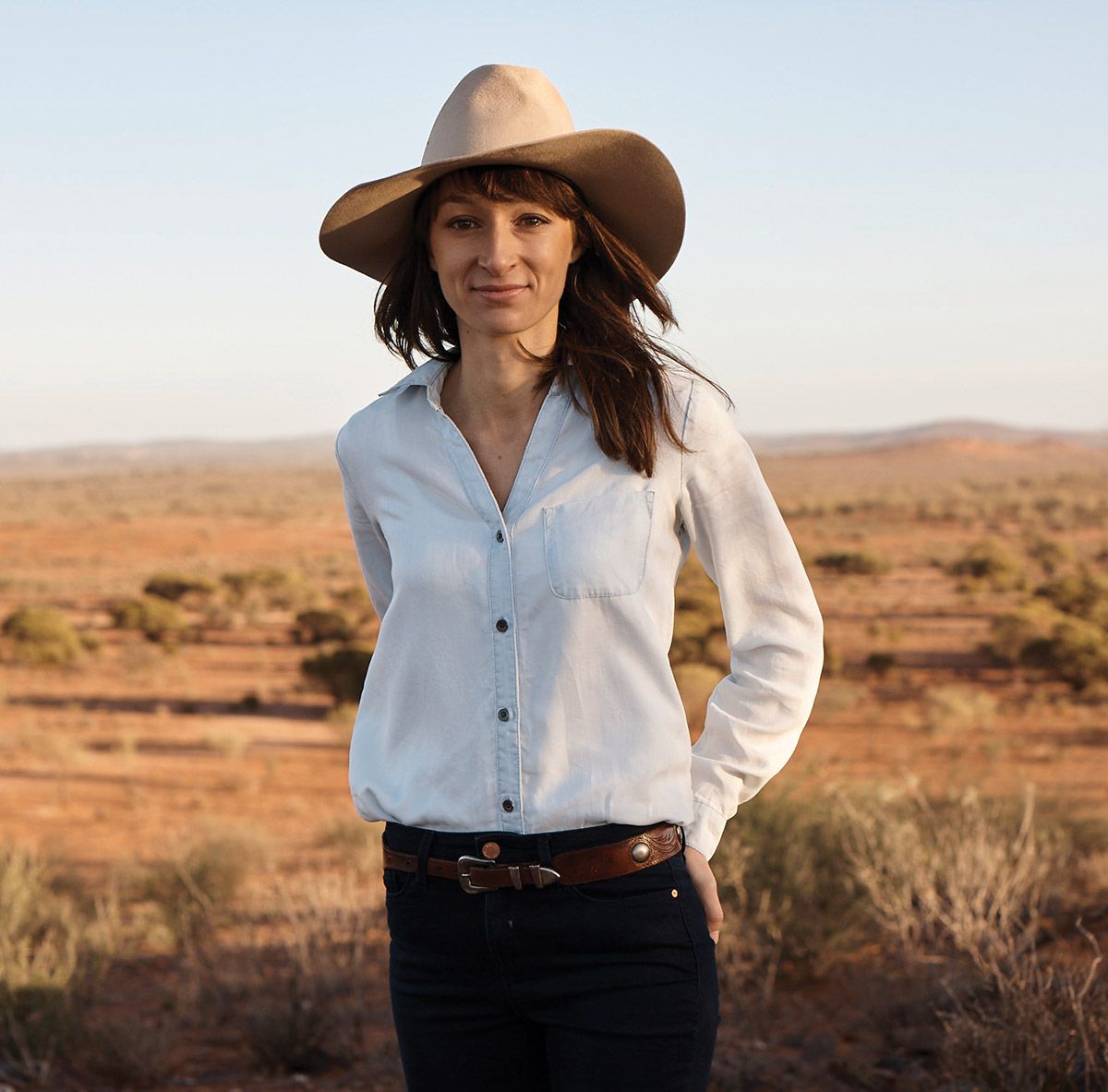
“Climate change is rapidly reshaping the whole world, including its food and farming systems,” says Anika Molesworth, Ph.D., an Australian farmer, scientist, award-winning author, and the founder of Climate Wise Agriculture. “With rainfall and temperature patterns changing, with changes in pest and disease distribution, and with extreme weather events rocking the foundations of farming businesses, we need to be better prepared and able to adapt. I think technology, including AI, is one important tool to do that.”
Getting Into the Weeds
Farmers today face a multilayered dilemma. They’re keenly aware of the environmental and long-term benefits of sustainable farming. Sustainable crops, free from excessive chemicals, lead to healthier soil, better yields, and a safer environment. Past practices, however, have come back to haunt them. The overuse of pesticides and herbicides has given rise to herbicide-resistant “superweeds.” These hardy weeds are immune to traditional chemical treatments, making them a significant problem for farmers. While the allure of sustainable farming beckons, the immediate and pressing issue of these resilient weeds cannot be ignored.
In fact, according to research from Montana State University, without a better option to control weeds, Montana could lose as much as 68 percent of its average annual yield, costing growers $43 million in lost revenue. And other states growing sugar beets—including Idaho, Michigan, Minnesota, Nebraska, North Dakota, Oregon, and Wyoming—could lose approximately 22.4 million tons of sugar beet yield, valued at approximately $1.25 billion. Farmers need solutions that address both the present and the future.
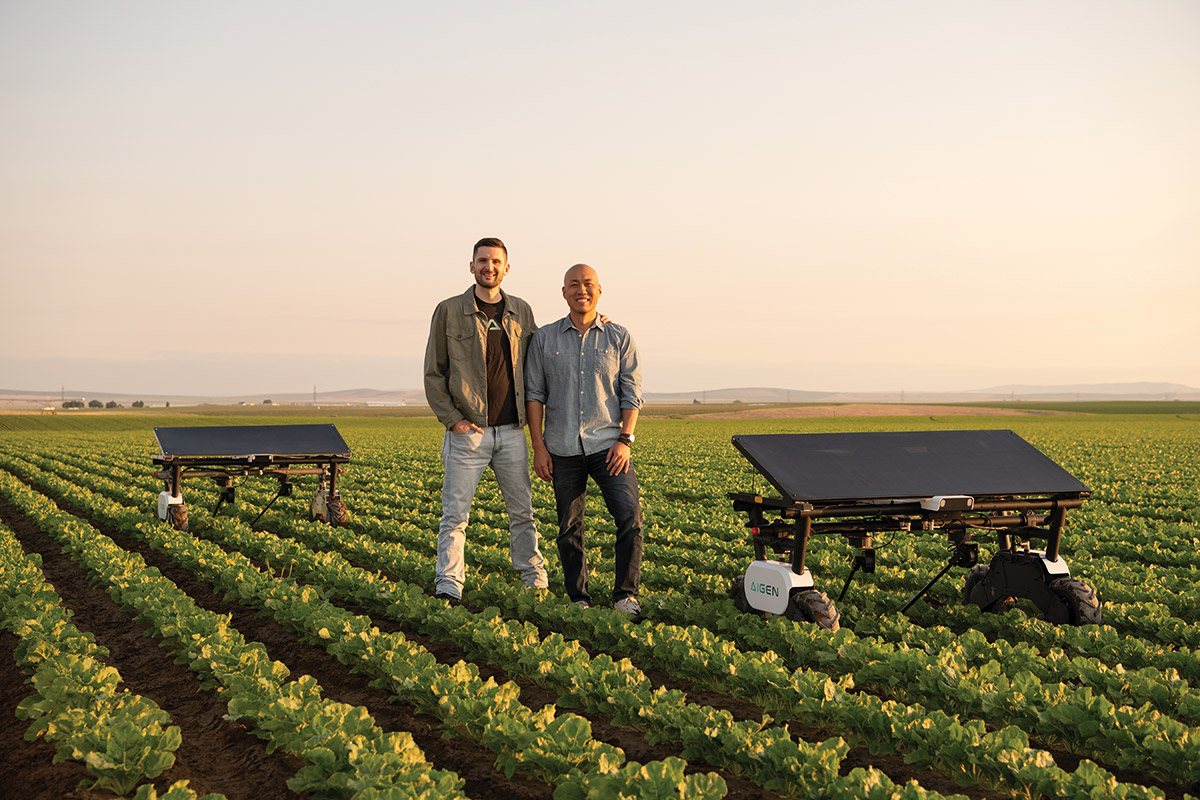
Kenny Lee, co-founder of agricultural robotics start-up Aigen, recognized this conundrum. Before diving into tech development, he and his co-founder, Rich Wurden, a former Tesla engineer, spent ample time on fields, talking to farmers and even growing sugar beets themselves. They quickly grasped that while farmers were interested in the long-term benefits of sustainable farming, they also were desperate for immediate, scalable solutions to their weed problems.
“When you talk about sustainability, robots that can do things like targeted weeding or even targeted pesticide applications will make a real difference,” says Elizabeth A. Bihn, Ph.D., executive director of the Institute of Food Safety at Cornell AgriTech. “First, using less chemicals leads to healthier soil. And, second, robots can reduce the use of tractors, which run on fossil fuels, so that cuts those emissions. It’s a win-win.”
With those insights in hand, Lee and Wurden developed an autonomous, AI-driven, network-connected weeding robot called Element. Unlike more rudimentary agriculture robots, Element is independent from the tractor ecosystem and powered by the sun, eliminating the need for refueling or battery swaps, which saves time and money for farmers. Under the hood, it’s powered by advanced AI algorithms that allow it to differentiate between crops and weeds with incredible precision. This level of sophistication, driven by vast amounts of data and machine learning, simply wasn’t possible five years ago. Element uses computer vision to identify weeds, then mechanically tears them out using steel tools, reducing the need for chemicals. This approach not only tackles the immediate problem of herbicide-resistant weeds but also offers the long-term advantage of data-driven insights for sustainable farming at scale.
Wadhwani AI, a nonprofit and Google.org grantee, is also exploring how AI can support farmers—specifically those who grow cotton. Wadhwani AI has developed an app called CottonAce that uses AI to analyze photos of pests trapped on farms. The app counts the number of damaging pests, like bollworms, and determines whether applying pesticide is recommended based on reaching an economic threshold, helping farmers gauge whether the potential crop damage by pests justifies the cost of pesticide application. This provides smallholder cotton farmers with localized warnings and advice to better target pesticide use. While still in its early stages, the app works offline and has been translated into nine languages to increase accessibility. Initiatives like these demonstrate the potential for AI tools to be inclusive and empower farmers with data-driven insights, even with basic technology.
“When you think about the way that food is grown, and the number of acres that we need to transform the soil for commodity crops, it’s a massive challenge,” says Lee. “But when you get to the bottom of it, it’s not really about technology. It’s about people. We want to use AI as a tool to help the people actually working on the land.”
Over time, Lee believes, Aigen’s chemical-free weeding will open the door to more sustainable agriculture practices. From the start, the robots reduce fossil fuels and soil compression from tractors while lessening chemical dependence. In addition, the weeding robots collect high-resolution farm data that, after being anonymized and aggregated, can be used to train AI to inform the optimization of growing conditions for the long term, which is what farmers want.
Farming for the Future
“Farmers are probably some of the most conservation-minded people on the planet,” says Tony Latcham, who raises corn, soybeans, hay, and cattle on his family farm in Iowa, and who expects his sons to take over in several years. “We love the land. We work on it everyday. It’s something we’re really proud of, so we want to take care of it for future generations. If AI helps us do that in more efficient and cost-effective ways, we’re all for it.”
While the short-term benefits of AI-driven solutions like weed management are evident, the long-term implications for sustainability are even more profound. Aigen’s technology, for instance, does more than just tackle the immediate “superweed” problem. By reducing the need for chemicals and tractors, the soil retains its health and vitality. The continuous data gathering by these robots provides insights into soil health, moisture levels, and other critical factors that can guide sustainable farming practices.
Other start-ups are emerging in this space as well. LandScan, a platform that will soon be used to assess the soil on almond farms in California, employs soil probes with advanced sensor technology to digitally characterize soil variability at a very granular level. Traditional soil sampling involves taking a chunk of soil, sending it to a lab, and waiting for results. But LandScan’s sensors can instantly measure soil properties such as hardness, friction, and spectroscopy right on the spot. Instead of analyzing a disturbed sample, these sensors provide data on the real soil structure that plant roots experience. This could be particularly valuable in parts of the world that never had soil surveys.
“Our technology allows us to digitize the process of soil surveys and characterize variable land at different locations,” says Jeff Dlott, Ph.D., COO of LandScan and a member of the Environmental Farming Act Science Advisory Panel at the California Department of Food and Agriculture. “Over time, with machine learning and AI, this knowledge will help us understand which crops can grow most successfully in which soil types, and help farmers avoid wasting resources by managing to the weakest part of a field.”
By understanding the soil’s needs at a granular level, farmers can tailor their interventions, ensuring that the land remains fertile and productive for generations to come. This data-driven approach can lead to better water management, reduced chemical usage, and improved crop rotations, all of which contribute to farms’ long-term sustainability.
“We’re talking about feeding the world,” says Latcham. “You know, we can’t grow more farm ground. Every year, we’re losing more acres to urban sprawl. The earth is changing. So we really need to get the soil right and we need the technology to keep getting better.”

Growing More Food, More Sustainably
Reimagining a more sustainable food production system means enabling agricultural transformation at scale. That’s what motivates the leaders at Mineral, a recent spin-off from X, the moonshot factory and now an Alphabet company, to build new AI solutions tailor-made for agriculture, with global ambitions.
Working closely with the Alliance of Bioversity International and the International Center for Tropical Agriculture, as well as other partners, Mineral is leveraging breakthroughs in AI and computer vision to develop solutions that capture and interpret complex plant-by-plant information. By applying powerful, AI-driven perception technology to its rovers, and now to other edge devices such as smart cameras and mobile phones, Mineral can gather and analyze critical crop production data about soil health, yield predictions, ripeness, disease risk, and weed presence. That data can be used to inform better farming practices and to breed climate-resilient crop varieties. Ultimately Mineral’s technology will include reasoning and actuating across crops and geographies.
“The variable conditions farmers manage on a daily basis can be infinite, from soil health to farm management practices to weather patterns,” says Erica Bliss, chief commercial officer of Mineral. “The good thing for growers is that AI is really well suited to the complexities of agriculture. Because it makes sense of rich datasets like imagery and video as well as text at an accelerated pace, AI puts efforts like identifying climate-resilient crop varieties or enhancing precision agriculture equipment, among other things, on the fast-track toward more sustainable outcomes. And time is of the essence to address the drivers of and impacts from climate change.”

Mineral’s AI-driven tools are already providing agribusinesses and farmers around the world—from Brazil to sub-Saharan Africa—with a better understanding of the variables involved in outdoor farming. This knowledge supports growers in improving plant-level management, driving greater precision to reduce the use of water and chemical fertilizers. At the same time, Mineral is developing AI-powered tools that can help farmers prepare for the future by enabling them to better understand what variety of crops will survive amid droughts and floods. For example, using AI in seed breeding, where there might be more than 30,000 varieties of a bean, can dramatically lower costs and complexity.
“At Mineral, we’re working to enable a global sustainable food system by solving some of agriculture’s greatest challenges at scale,” says CEO Elliott Grant. “There’s no time to waste to help the food production system adapt to a changing climate, to find more resilient crop varieties, and to improve soil health and restore biodiversity.”
As of July 2023, the Mineral team reported that it has captured more than 800 million plant images across five continents and diverse growing conditions, modeled more than 120 different plant characteristics, and analyzed 14 crop types. These kinds of multimodal reasoning capabilities are the beginning of what can eventually contribute to scaling sustainable transformations across farms and geographics.
“Growers are demanding more from their technology,” Bliss says. “They want and need help making simpler decisions more quickly and managing their farms in a more efficient and profitable way. But nature is still quite complicated, so agriculture requires the most advanced technological solutions, tailor-made just for its unique challenges and conditions, that growers can reasonably use for both row and specialty crops. It’s really the only way to transform the food production system into a more sustainable way to feed the planet and protect the environment.”
The Farmer’s Opportunity
The next era for agriculture will be powered by more AI-driven solutions, not more horsepower. While technology in the agriculture industry has led to important productivity gains throughout history, there’s a limit to how much land exists and how big machines can get. Over the past 70 years, U.S. crop yields have tripled, tractor horsepower has multiplied by four times, and the typical weight of a fully loaded combine has increased nearly tenfold, according to Mineral. But as machines become bigger, they also become more complex, expensive, and diesel-intensive, leading to massive contiguous farms, uniformity, and soil compaction. At the same time, floods, droughts, wildfires, and other extreme weather events create an onslaught of challenges for farmers.
AI still has a ways to go, but farmers and engineers are optimistic about its potential. With more global-scale experimentation and collaboration, AI-powered tools can hopefully support people in building resilience to a changing climate, and break down traditional barriers by unlocking the value of data.
“I think we’re entering the golden age of satellite data,” says Meha Jain, associate professor at the University of Michigan School for Environment and Sustainability. “Using satellite data with AI, we can map characteristics including crop type, yield, water use, and the adoption of technologies and practices, including regenerative agricultural practices. We can use these data to understand the adoption of sustainable practices at scale and also what their impacts may be on yield and environment outcomes. This work can help farmers identify effective technologies at the landscape level, and help policymakers and extension agents identify low-adoption regions that can be targeted with further interventions.”
Minimizing chemical and water use and reducing waste while encouraging strong production can help farmers both feed the growing global population and lessen the impact that the food production system has on the planet. Ultimately, the future of sustainable agriculture will depend on farmers, scientists, innovators, and policymakers working together. By embracing new technologies like AI while staying grounded in the wisdom of traditional farming practices, we can hope to meet growing food demands in a way that regenerates our soils and ecosystems for generations to come.