

One of the most surprising acts to me about the past 20 years has been that gains in technology have led to gaps in income inequality—some economists have estimated that it explains half or more of the increasing gap in wages. I expected the opposite: that technology would be an equalizing force.
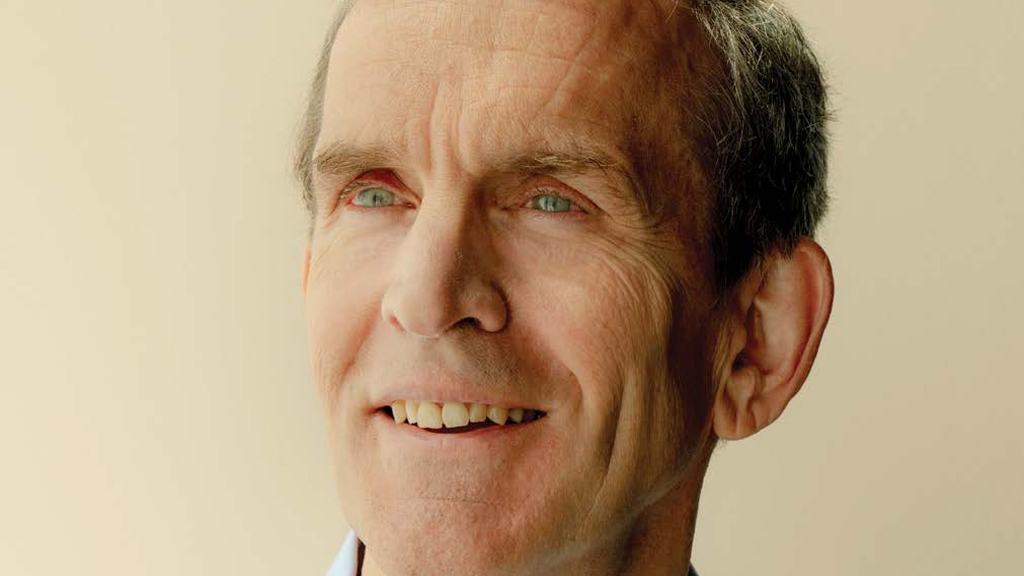
Now, as we stand at the cusp of a new era, I wonder whether the same pattern will repeat itself. If everyone has access to many of the same AI tools, will that make us more equal? Or will the opposite happen, with AI potentially consolidating power and wealth in the hands of people who use it best? I spoke with Erik Brynjolfsson, a professor and senior fellow at the Stanford Institute for Human-Centered AI and the director of the Stanford Digital Economy Lab, about what he thinks is coming next and what can be done to steer technology toward fostering more, and better, opportunities. Our conversation has been edited for length and clarity.
Nicholas Thompson Technological advances sometimes make income inequality grow. Sometimes they make it shrink. What influences those outcomes?
Erik Brynjolfsson This is a really important question. For a long time, economists had this simple model of a neutral technical change. But then we started noticing in the ’70s,’80s, and ’90s that inequality was getting a lot worse. And most economists, including me, attributed that mainly to technology. Globalization was also a factor. But technology, especially IT and computerization, seemed to have a significant effect on worsening income inequality through several different mechanisms.
I wrote about those mechanisms in the book I co-authored with Andrew McAfee, The Second Machine Age. One was what we call “skill-biased technical change” that complemented more-skilled workers and substituted for less-skilled workers. And you see these tremendous gaps grow between, say, people with a high-school education or less versus a college graduate. And that just kept worsening for a few decades. There was also a bit of a shift between capital and labor. So the labor shares fell. And last but not least, superstars seem to benefit especially. So the top 0.1 percent in a lot of areas got these amazing incomes as they were able to use digital technologies to scale to millions or billions of people in a way that would have been impossible previously.
Thompson All right. So you have those three factors: economic benefits, capital and labor, and superstars. There must have been some effects of technology that pushed in the other direction, though, right? Everybody has access to the same browsers and platforms.
Brynjolfsson Absolutely. So those three tended to be very powerful and dominate the conversation. But there are 1,001 tools that help different groups. And one of the categories that I think has been underestimated has been the access to free goods like search engines, maps, YouTube, Wikipedia …
Thompson But you don’t think they matter enough to affect the overall trajectory?
Brynjolfsson I think they’ve affected it a bit. But if you look at the statistics, the income data—which may have some biases—or things like mortality statistics, I think the dominant story is still in the direction of growing income inequality.
Thompson So we have a new generation, a new revolution in technology, perhaps as big as the transistor, perhaps as big as the mobile phone, perhaps as big as the internet. Who knows? Will AI likely reverse these trends of growing income inequality or augment them?
Brynjolfsson We don’t know, to be fair. But there is some evidence that in some situations it’s reversing the trends. And I’m hopeful that that will be a more general thing. But the technology is so new—if you’d asked me this question six months ago, I might have given you a different answer.
But I can tell you what we’ve seen so far, which is a decrease in income inequality. I did a very in-depth study with Lindsey Raymond and Danielle Li in which a large language model was introduced to a call center to help operators, not to replace them. And what we found was that the less-skilled workers benefited the most. They had about a 35 percent increase in productivity. The most-skilled workers benefited almost zero. The LLM was capturing a lot of the tacit knowledge from the more-experienced workers about how to solve problems for customers, how to speak to make them happier and like the interaction more, and it was transferring that to the less-skilled workers in a very efficient way so that within a few months, these less-skilled workers and the new workers were going up the learning curve very rapidly. As a result, AI tended to close the gap between the most-experienced and less-experienced workers.
Thompson So let’s consider the most-skilled economics professors and researchers versus the least-skilled economics professors and researchers. The most skilled will benefit less than the least skilled?
Brynjolfsson Quite possibly. I mean, we haven’t done that specific study, but there’s a mechanism that is plausible. And we’ve seen it happen in other situations. Because again, there’s a lot of tacit knowledge that we have that until now has been almost impossible to convey to others. But machine learning is very different. Some people call it software 2.0. Previously, you had to write down step-by-step what you did. And not all of us could explain exactly how to ride a bike or tie a shoe or how to recognize a good turn of phrase. But now the machine looks at the data and it learns. So it’s opened up trillions of dollars’ worth of knowledge that it’s making accessible to other people.
This leads us to an interesting point where we’re going to have to rethink how we compensate people and how we reward people and their job security. In the case of that call center, those operators were mainly rewarded based on how happy they made their own customers. But in the story I just told, the most-skilled workers were helping not only their own customers but also other agents’ customers by basically training the system. And if you’re a smart company, you’d want to update your compensation so you’re rewarding those kinds of workers. You want more of those kinds of workers, and you want them to be doing more to push the frontier. That’s how your whole company benefits. The narrow measure of how each operator’s customers are doing would give a misleading signal of the total contribution.
Thompson If AI makes everybody more efficient, maybe you don’t need as many people. Then a whole bunch of people lose their jobs, and we haven’t done anything good for income inequality.
Brynjolfsson I don’t think that’s quite the right story. And let me give you three reasons. First, there’s the sweep of hundreds of years of history to where we are right now, close to record-low unemployment and record-high labor share of the population employed. And through wave after wave of technology, people have told the story that it’s making people more efficient so that we’ll need fewer, and it’s never happened. So why has it never happened?
There are two main reasons. One is that if you look at particular tasks that the technology helps with, it’s awesome. But it rarely if ever does the full set of tasks that are in an occupation. For example, at one point AI researchers said that we should stop training radiologists because machines could read images better. I think that’s basically right about reading the images, but there are roughly 30 distinct tasks that a radiologist does. Only one of them is reading images. It’s a super important one, but there are other things that radiologists do, and the technology has not helped with most of those. Ultimately, it’s led to more restructuring. I think it will lead to more restructuring where you use the tool to help with part of what you’re doing, but not all.
The second reason is an economics 101 lesson. So when the price of a good falls, the quantity purchased increases. You have downward-sloping demand curves. If the demand curve is very steep, then as the price falls, the demand increases only a little bit, and you end up spending less. And that’s most everyone’s intuition. But in many cases, the demand curve is very flat. And when the price falls a little bit, the quantity purchased grows by even more. So, for instance, when jet engines made airline pilots more productive in the ’50s and ‘60s, we didn’t hire fewer pilots. Why? Because with that lower price, we all fly a lot more. So now we hire more pilots. And we wouldn’t have done that when it was expensive.
So let’s go back to radiologists: Let’s say my shoulder is a little bit sore right now. It’s probably too expensive for me to get an MRI, but if the cost went down, me and millions of people in the United States and India and Africa would love to get more access. So it’s quite possible that lower prices lead to a greater demand.
Thompson Back to the call center. Theoretically, the service from the call center will be so much better because the operators will have been trained, the response times will be quicker, and whatever fee the employer pays will be lower. So maybe the number of calls customers make and the number of problems operators solve will be higher. And the number of people employed will increase as well.
Brynjolfsson Exactly. That’s totally possible. I don’t know how steep the demand curve is for a call center, but I think there are a lot of problems where I don’t bother calling. But if it were effortless and I was sure I was going to get the right answer and not be stuck on hold for 45 minutes, we all might access a call center a lot more.
Thompson So, then, going back to the three causes of increased inequality in the past technological revolutions, one of them was the ratio of investments in capital to the investment in labor. Won’t that likely shift evermore toward capital?
Brynjolfsson Probably. And that’s why I think the first thing I said was “I don’t know for sure.” I see a mechanism where we get less inequality—that’s the one I just described. And happily, we’ve observed that in some real-world cases. This is not a hypothetical—this is real-world data that I and others have been gathering. But I can easily see a story in which capital continues to gain and there’s less demand for labor. I can also see a story in which superstars continue to have even more influence. And those mechanisms may end up being quite important.
One thing I can say is I’m pretty confident we’ll see a lot more disruption in any of these stories—that the set of people who are affected will change, maybe by an order of magnitude, quite substantially. Even if the total employment stays similar, and we have a lot of employment, I’m pretty confident it’ll be different types of skills and tasks and even people that are demanded. And that’s going to lead to a lot of disruption.
What we need to do is put in place not just a safety net and training mechanisms, but one that is very nimble and flexible and can adjust on the fly—so that when I and others do our next study, and we see that the trend is a little bit updated from what I said six months earlier, that we have tools that can adjust to it. And frankly, our existing training, job matching, and safety nets are not nearly nimble enough. So that’s a priority: to be ready for this disruption. It’s not mass unemployment I’m predicting, but mass disruption.
Thompson Now, what if I were a regulator or a government official who only cared about income inequality. All I want to do is make the Gini coefficient in the United States, or in whatever country I live in, better. What would I do with AI?
Brynjolfsson What not to do is to try to freeze in place the existing jobs. And that’s the first instinct of people, especially in Europe, but also in the United States. And that is the worst strategy. No country has ever preserved incomes or had a successful society by freezing in place all the old jobs. So you need to lean in and realize that the change is coming. And, if anything, you need to make it easier for people to adapt to the new jobs. And that means you need to put tools in place for training and for job matching—you can use AI to help identify the skills that people have that will be in demand or that are in demand in other areas, and what new skills they would need.
You can also use AI to do that training in a mass personalized way, far more efficiently. There’s a long body of literature that says that when people are trained in classrooms with dozens of other people, it’s not nearly as efficient as when they get one-on-one personalized training. Of course, personalized tutoring is way too expensive for most people, but with an LLM, you can do that. You can get something that’s very customized to exactly a person’s needs. And that is the future I see ahead of us—that we’ll be able to train people a lot more quickly.
Going back to the call center example, one of the striking things was that there were some unexpected outages. And what we found, a little bit surprisingly, was that when the call center operators lost access to the LLM due to a temporary system outage, the less-experienced people continued to perform better. Not quite as well as they did when they had the LLM, but better than the group that had not had access to it. So they were going up the learning curve faster. They were internalizing some of those tips and tricks that the LLM had been coaching them on.
Thompson You wrote a great paper titled “The Turing Trap” last year. The hypothesis, if I can briefly summarize, is that AI is more likely to displace people if it’s trained to replicate human skills and human intelligence. Will this fact make this inequality problem worse?
Brynjolfsson It will if they continue that way. The big message of “The Turing Trap” was that we have choices. We can use AI to imitate humans. And Alan Turing, a great researcher, had this iconic idea. If we can make a machine that’s so similar to a human that we can’t tell the two apart, we will have achieved artificial intelligence.
I think we’re suddenly, perhaps belatedly, realizing it was the wrong goal all along. Because if you imitate a human, in economic terms, you make the machine a better substitute for the human. And having a substitute tends to drive down wages and value. That’s not what we want. We want to drive up wages. Luckily, it turns out that you can have big increases in productivity without having a machine substitute. You can have a machine complement humans, meaning that they become more valuable in the presence of it. Like my left shoe is more valuable within the presence of its right shoe.
I would love to steer technologists, entrepreneurs, managers, and policymakers all toward thinking, How can we create more complements and fewer substitutes? If we do that, we’re more likely to get shared prosperity—not just a bigger pie, but a more evenly distributed pie, because everybody will be needed and contributing. Conversely, if we go down the path of using AI to substitute for or to imitate humans, I think the tendency will be to concentrate wealth and power in a small number of people or organizations that have control of the capital. And ordinary people, or even people with lots of expertise, will become less valued because the machine will do their same job.
Doug Engelbart at Stanford in 1962 wrote an iconic paper, a little bit after Alan Turing’s paper, about intelligence augmentation. And his vision was exactly what I’m saying: Let’s look for ways of making these machines a tool. I think that the goal a researcher should have is not making the machine as powerful as possible per se, but making the human plus machine together as powerful. And that’s not the same question. If you want the radiologist using a tool to come up with better answers, you probably want that tool to be able to explain why it’s giving recommendations. Even if it’s only 87 percent accurate instead of 89 percent accurate, that may be valuable, because when that tool says, “Oh, cut off the patient’s left leg,” I think the radiologist is going to want to know, “Okay, explain why you want us to do this.” If it’s 87 percent accurate but gives a logical explanation that the radiologist can understand, then the human plus machine together will get better outcomes than the machine by itself will.
Thompson So let’s get the humans and machines to work together and maybe, this time, society will become more equal and more just.