
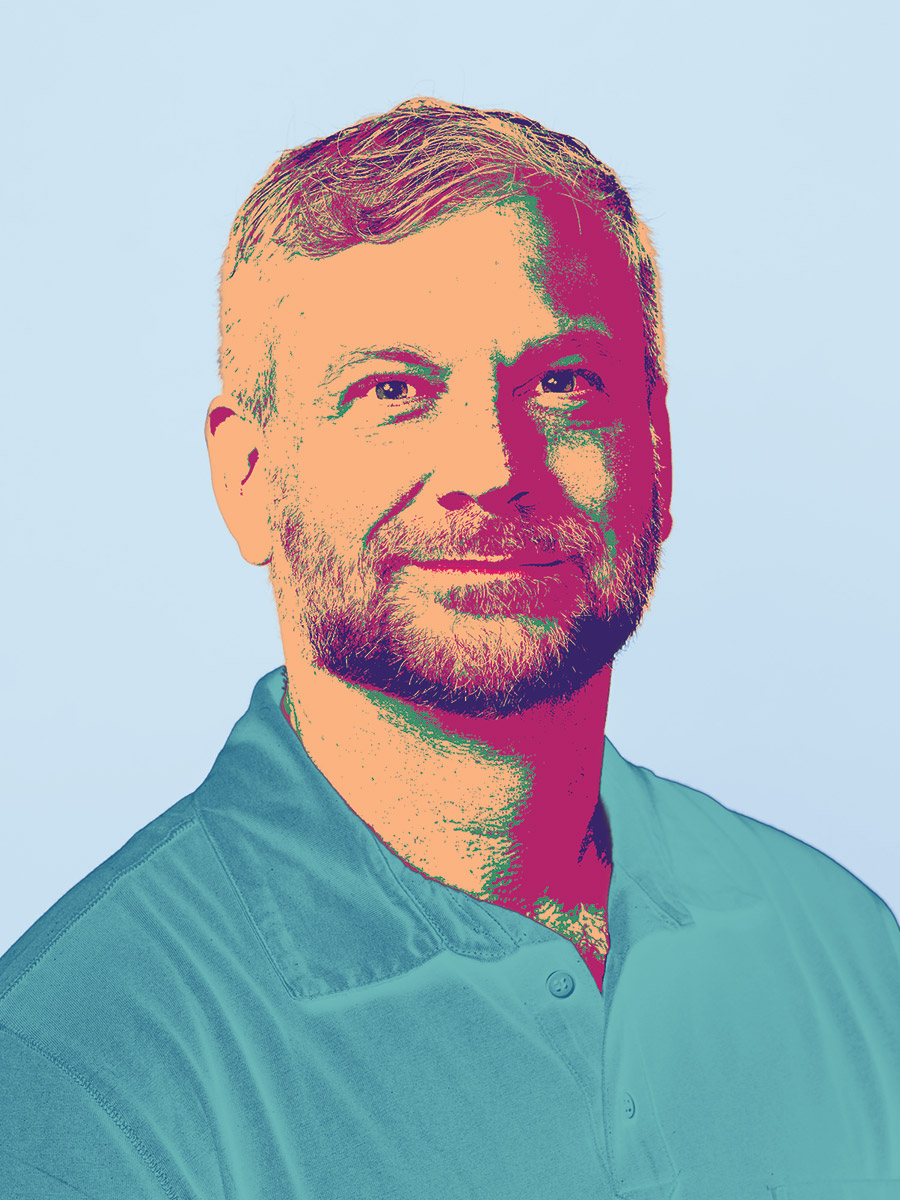
In the quest to understand and replicate the marvels of nature, humans have often looked to the skies. Birds, with their graceful flight, have been a source of inspiration. Yet, when it came to creating our own version of flight, we didn’t replicate the bird; we built the airplane. Greg Corrado, Distinguished Scientist and Head of Health AI at Google, suggests that in the realm of technology, we often draw from the principles of nature without necessarily mimicking them.
We studied birds and insects to learn the mechanics of flight. However, when humans sought to fly, we realized that copying the exact mechanisms of birds wasn’t always the most practical solution. Similarly, in the domain of AI, neural networks—inspired by theories on how biological brains process information—represent our effort to harness the principles of biology without replicating them entirely.
“The same thing happens in AI,” Corrado says. While neural networks take inspiration from the brain’s functioning, the tools employed in AI—electricity and silicon—are inherently different from the organic makeup of our brains. “We couldn’t do that if we tried,” Corrado adds.
AI in Health Care: Focusing on Real-World Impact
One of the most promising areas where AI is making a difference is in health care. Consider this: A person you love goes in for a routine mammogram. A few days later, they get a call from the doctor’s office. There was something unusual in the results; they’ll have to schedule a follow-up. But scheduling being what it is these days, this takes weeks—weeks of angst and worry as worst-case scenarios run through their mind. Eventually, the study is ordered, the appointment happens, and they are deemed to be okay, no biopsy needed.
But what if AI could streamline this process? Corrado’s team at Google is working on a program in collaboration with Northwestern University. This program uses AI to examine mammograms more extensively in real time, alerting medical professionals to potential issues and allowing for immediate follow-up. It doesn’t replace the human touch, but enhances it, making the process more efficient and humane.
“And so it relieves this kind of anxious waiting, even when there isn’t a problem,” Corrado says. “And when there is a problem? Well, it shortens the time to getting a more definitive diagnosis, because then you can bring someone in, and their very next appointment can be their biopsy.”
Moreover, AI is playing a pivotal role in deepening our understanding of human genetics. Alongside a consortium of researchers, Corrado’s team is at the forefront of creating a “human pangenome.” This is no ordinary genetic database. Unlike the current human reference genome, which represents data from a single individual at each DNA point, the pangenome integrates data from multiple individuals at every position. This groundbreaking resource promises to more accurately represent human genetic diversity, paving the way for enhanced diagnosis, treatments, and novel therapeutics.
Moving at the Speed of Trust
Corrado sees programs like the one at Northwestern as demonstrative of how AI can help caregivers do their jobs more effectively, and alleviate human suffering in the process. But implementing AI in health care takes more than simply showing up and plugging something in. It takes buy-in. And buy-in takes trust.
“I believe that the way that technologies like this can be most useful is by bringing the technology to the folks who are real practitioners in the art,” Corrado says. “And that the right approach is to include doctors and health-care professionals and patient communities to help us understand what is the right way in which artificial intelligence can be used in expanding human health in the practice of medicine. These are new tools and new technical capabilities, and personally I really feel that the fundamental currency here needs to be understanding.”
This means reaching out to people who are not software engineers or AI researchers to help them understand how the systems work—at least well enough to decide how they might effectively use the technology. As a result, much of Corrado and his team’s time is spent with medical practitioners in clinical and research settings.
But as fast as AI capabilities are developing, the implementation of those capabilities will necessarily be regulated by the trust of human users. While technology development is guided by the art of finding out what’s possible, the everyday use of that technology—especially in medical settings—is guided by more practical questions: What should we do? What makes people feel safe?
While the potential of AI in health care is vast, its widespread implementation faces challenges. Introducing new technologies into the medical field requires rigorous testing, validation, and regulatory approvals to ensure patient safety. It’s about not just the technology’s readiness but also the health-care system’s ability to adopt it and adapt to it.
“It takes time and work and caution to go from the category of ‘could do’ to a space of ‘should do,’” Corrado says. There’s a quip that Corrado uses sometimes: “Health care moves at the speed of trust.” Building that trust is as important as building the technology itself. It’s what allows programs like the one at Northwestern or the pangenome to exist.
The AI systems Corrado is involved with don’t replace doctors or their expertise. Instead, they offer a tool that can quickly analyze data, spot potential issues, and provide feedback.
“Health care is fundamentally about people caring for people,” Corrado says. “My hope is that these technologies are going to enable and expand that and make it more possible for people to feel empowered on their own medical journey and more connected to their doctors and their care team.”